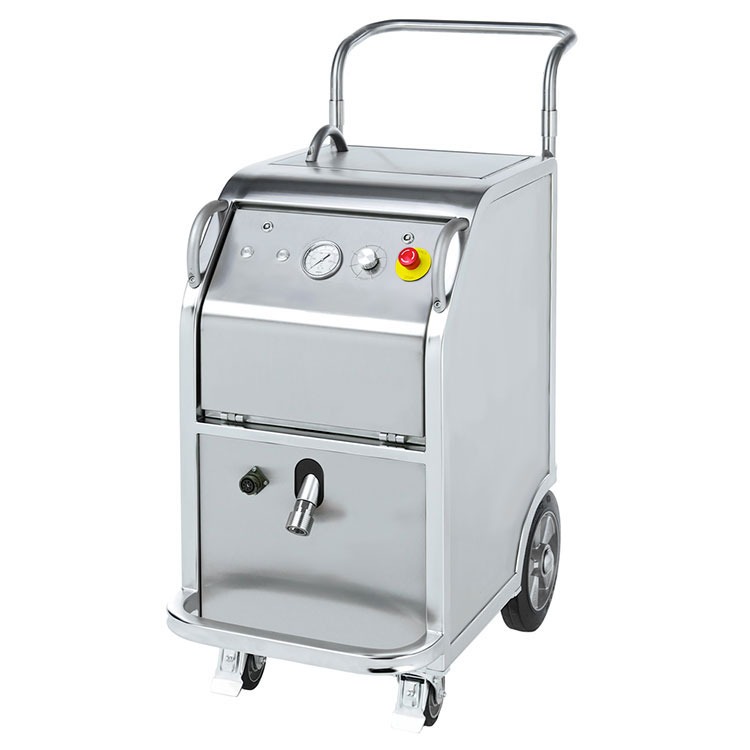
Description
WHAT IS DRY ICE?
Dry ice is the solid state of carbon dioxide (CO₂), formed at a temperature of -79 °C.
Carbon dioxide occurs naturally as a gas on Earth. It is non-toxic and tasteless, and is often used in
carbonated beverages to give them a fresh taste and extend shelf life. Dry ice is also used in the food
industry to cool food or in healthcare.
DRY ICE CLEANING THEORY
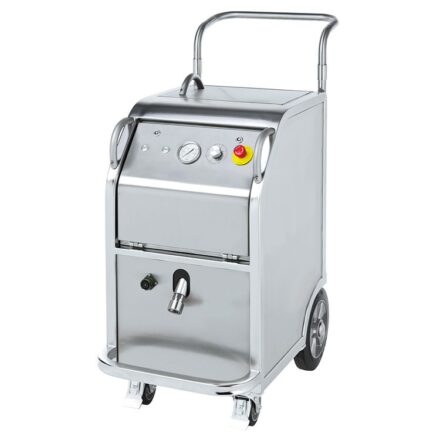
When the dry ice cleaning machine forces small dry ice pellets blasted onto a surface, the unwanted contaminants freeze
and crack, then an energy burst occurs, resulting in thorough removal of unwanted coatings such as
grease, oil, paint, rust, adhesives, tar, ink, dirt, resin, etc.
THREE TYPES OF PHYSICAL INTERACTION DURING THE DRY ICE BLASTING PROCESS
1. Kinetic effect: the dry ice particles are accelerated to high speed.
2. Thermal effect: the dry ice particles hit the dirt layer at -78.5 °C, rapidly cool it down, it contracts and cracks form.
Due to different thermal expansion coefficients, the bond between the surface and the dirt is loosened.
3. Sublimation: on impact, the carbon dioxide changes directly from solid to gas and expands by about 700 times in volume in a split second.
This expansion literally “blows” the dirt off the surface. As a
result, only the loosened dirt particles remain at the end of the cleaning process and can be easily disposed of.
WHY CHOOSE THE DRY ICE CLEANING METHOD?
Dry ice blasting is a cleaning method that is effective, gentle on the cleaned materials, and
environmentally friendly. The dry ice cleaning process removes only residues and produces no secondary
waste. Dry ice lets you gently and eco-friendly clean deposits and residues
without having to dismantle any of your equipment. Save time and significant cost
expenses.
In detail, the dry ice cleaning method has the following advantages:
l No water required, non-conductive, no need to dry—allows immediate use after cleaning.
l No chemicals required, no secondary waste, environmentally responsible.
l Clean in place, no disassembly required, no need to rinse or cool down—reduces production downtime and unplanned
maintenance, increases production efficiency.
l Cleans faster and more efficiently—reduces cleaning time and labour costs.
l Non-abrasive—eliminates wear on machines or parts.
l Also non-toxic, odourless and suitable for all surfaces—metal, wood and concrete, even fine wood grain,
glass or textiles.
l Can be used for various dirt/coatings such as grease, oil, paint, rust, adhesives, tar, ink, dirt, resin, etc.
l Dry ice can inhibit bacterial growth. The dry ice cleaning process also stops the growth of fungi and spores and reduces the presence of other biological contaminants.